

Teaching in the Age of AI: Are You Ready for the Next Classroom Revolution?
Artificial intelligence has crossed the threshold from speculative tech-demo to everyday classroom reality. Across the world, from bustling municipal school districts in North America to rapidly digitalizing learning centers across the Asia-Pacific, AI tools are generating lesson plans, grading quizzes, tailoring adaptive reading modules, and translating coursework in real-time.
For educators, this moment brings a mixture of curiosity, awe, and an uncomfortable question: Where does my teaching career fit into an automated world?
The short answer? The world needs dedicated educators now more than ever. But the nature of how we teach, lead, and design learning experiences has irrevocably changed.
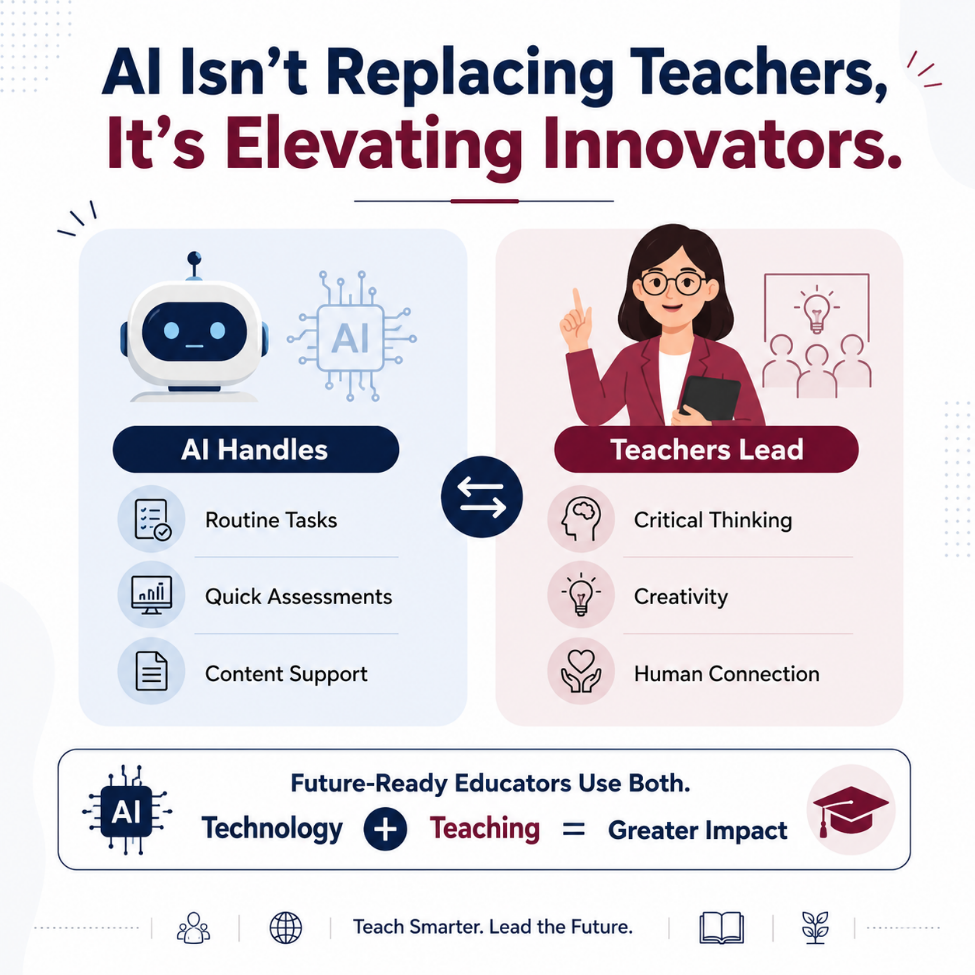
AI Isn't Replacing Teachers, It's Elevating Innovators
There is a persistent myth circulating in staff rooms around the world: AI is coming for teaching jobs.
The truth is far more nuanced. AI cannot build meaningful rapport with a struggling student. It cannot facilitate empathy during a heated debate, foster social-emotional growth, or notice when a child’s quietness signals a cry for help. What AI can do, however, is handle the administrative grind that drains educator energy. It acts as a force multiplier, automating repetitive grading, generating personalised learning paths, and streamlining curriculum design.
According to the World Economic Forum's Future of Jobs Report 2025, technological advancements are expected to create 170 million new jobs globally by 2030, while digital skills, analytical thinking, and lifelong learning remain among the most sought-after competencies. For educators, this shift presents an exciting opportunity to grow rather than simply adapt.
If you want to stay relevant, confident, and future-ready, developing expertise in teaching technology may be one of the smartest career decisions you can make. This shift is creating a distinct divide in the global education market:
- Educators who treat technology as an intimidating threat.
- Educators who harness technology to transform learning environments and advance into high-impact leadership roles.
- The question isn't whether AI will transform your school. It’s whether you will be the passive recipient of that change, or the architect leading it.
AI Is Reshaping the Modern Classroom
Today's classrooms look very different from those of even five years ago. Students are using AI-powered learning assistants to clarify concepts, language translation tools to improve accessibility, and adaptive learning platforms that personalise lessons according to individual learning needs.
Teachers are also embracing AI in practical ways by:
- Creating lesson plans more efficiently
- Generating quizzes and assessments
- Providing faster, personalised feedback
- Monitoring student progress through data insights
- Supporting learners with different abilities and learning styles
Rather than replacing educators, AI is reducing repetitive administrative tasks, allowing teachers to spend more time mentoring, motivating, and supporting students. The role of the teacher is evolving from delivering information to facilitating deeper learning experiences.
The Numbers Don't Lie: A Global Boom in EdTech Demand
If you are looking for career stability and upward mobility, the data points in a single clear direction: digital learning leadership is booming.
According to global market forecasts, the market for AI in education is projected to soar from $11.4 billion in 2026 to over $57 billion by 2033, reflecting an explosive compound annual growth rate. Furthermore, the World Economic Forum estimates that job roles in educational technology are set to expand by 16.5% annually as institutions worldwide rush to modernise.
"Global education isn't just adopting new software, it is redesigning learning architectures. The highest demand isn't for computer programmers, but for educators who understand how people learn in digital spaces."
This demand spans beyond primary and secondary classrooms. Higher education institutions, corporate learning and development (L&D) divisions, and government policy groups are all competing for talent capable of integrating emerging tools ethically and effectively.
The Skills Schools Are Looking For Are Changing
Educational institutions today are searching for professionals who understand both pedagogy and technology. They need teachers who can confidently integrate digital tools into learning while maintaining strong instructional practices. This means educators are increasingly expected to:
- Design technology-enhanced learning experiences
- Use digital assessment tools effectively
- Interpret learning analytics
- Promote responsible and ethical AI use
- Foster creativity, collaboration, and critical thinking
These capabilities are becoming valuable across schools, universities, corporate learning environments, and online education platforms. As educational technology continues to expand, teachers who embrace innovation will be better positioned for long-term career growth.
Why Teaching Technology Has Become a Career Advantage?
As education systems continue their digital transformation, qualifications that combine educational leadership with technology are becoming increasingly valuable. A fast-track online M.Ed. with teaching technology degree equips educators with practical knowledge that goes beyond traditional classroom methods.
Instead of learning technology for its own sake, professionals explore how digital tools can improve teaching effectiveness, learner engagement, curriculum design, and educational leadership. Typical areas of study often include:
- Artificial intelligence in education
- Digital learning design
- Educational technology integration
- Online and blended learning
- Assessment technologies
- Learning management systems
- Digital leadership and innovation
These skills prepare educators to confidently navigate modern educational environments while responding to future developments in technology.
Diverse Horizon: Career Opportunities Continue to Expand
Digital education is no longer limited to online schools. Today, organisations across multiple sectors require professionals who understand how people learn in technology-rich environments.
Some of the growing Career Opportunities with an M.Ed. in teaching technology degree include:
- Educational Technology Specialist
- Instructional Designer
- Curriculum Developer
- Digital Learning Consultant
- Academic Coordinator
- E-learning Manager
- Teacher Trainer
- Corporate Learning and Development Specialist
- Educational Programme Manager
- Learning Experience Designer
According to the U.S. Bureau of Labor Statistics, employment of instructional coordinators is projected to grow 7% between 2023 and 2033, reflecting continued demand for professionals who improve educational programmes and learning outcomes. Globally, the rapid growth of digital learning, workplace upskilling, and hybrid education continues to create opportunities for educators with technology expertise.
Preparing for the Future Starts Today
Artificial intelligence will continue transforming education over the coming decade. A fast-track online M.Ed. with teaching technology degree provides an opportunity to build these future-ready skills while remaining active in your profession. AI isn't here to render human educators obsolete; it is here to liberate us from administrative busywork so we can focus on what truly matters: inspiring, mentoring, and guiding minds.
The future of teaching won't be defined by those who resist technology, nor by those who blindly adopt every new app. It will belong to those who take the lead, master the tools, and humanise the technology.
Is your career ready for the future of education? The tools are ready. The demand is here. The next step is yours to take.
FAQs
1. What does an M.Ed. with Teaching Technology degree focus on?
This M.Ed. with Teaching Technology degree bridges forward-thinking pedagogy with digital innovation. It trains educators and leaders to integrate emerging tools like AI, educational data analytics, adaptive learning platforms, and digital media directly into curriculum design, classroom instruction, and corporate training frameworks.
2. Do I need a computer science or coding background to apply?
No. The programme focuses on educational design, instructional technology, and leadership, not software development or heavy programming. You only need basic digital literacy and a passion for modernising learning experiences.
3. Will an online M.Ed. degree hold the same value as an on-campus degree?
Yes. As long as the degree is awarded by an accredited university, employers evaluate the credential identically. In fact, completing the degree online demonstrates strong self-discipline, time management, and firsthand mastery of digital learning platforms.
4. Who should pursue an M.Ed. with Teaching Technology?
The programme is ideal for teachers, trainers, academic coordinators, instructional designers, school leaders, and education professionals who want to strengthen their digital teaching skills and prepare for the future of education.
5. Why is teaching technology becoming important for educators?
As schools, universities, and organisations increasingly adopt digital learning tools and AI-powered platforms, educators with expertise in teaching technology are better equipped to design engaging learning experiences, improve student outcomes, and adapt to evolving educational trends.

Comments & Replies
Read what others are saying and share your thoughts below.
Leave a Reply